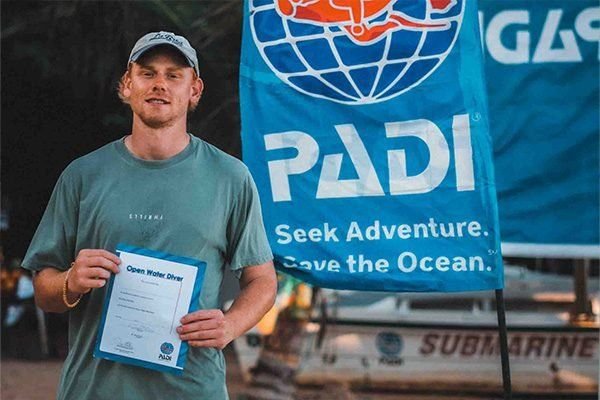
The PADI Open Water Diver Course is the world’s most popular beginner scuba certification. It’s designed to transform you into a confident, safe, and independent diver.
Once certified, you can:
- Dive up to 18 meters
- Dive anywhere in the world
- Dive with a certified buddy (no instructor required)
If you’re planning to learn scuba diving in Sri Lanka, this is your first step into the underwater world.
Sri Lanka offers warm waters, tropical marine life, and beginner-friendly conditions – making it one of the best places to take your PADI diving course.
Whether you’re in Unawatuna, Hikkaduwa, Mirissa, Trincomalee, or Colombo, the environment is ideal for new divers.
The purpose of the course is not just to help you breathe underwater – it is to teach you how to:
- Control your buoyancy
- Handle underwater problems
- Stay calm and comfortable
- Communicate with your buddy
- Safely ascend without assistance
The goal is confidence, safety, and independence.
1. Introductory Briefing & Shallow Water
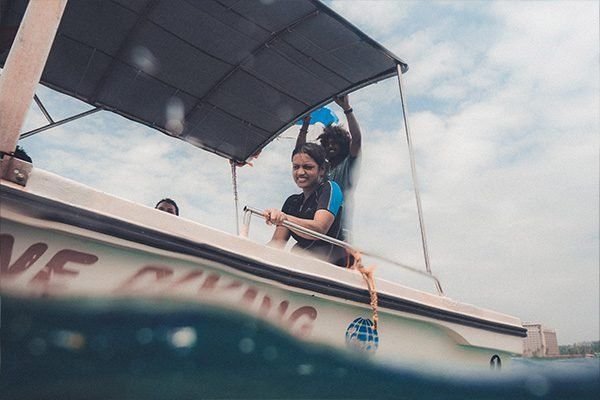
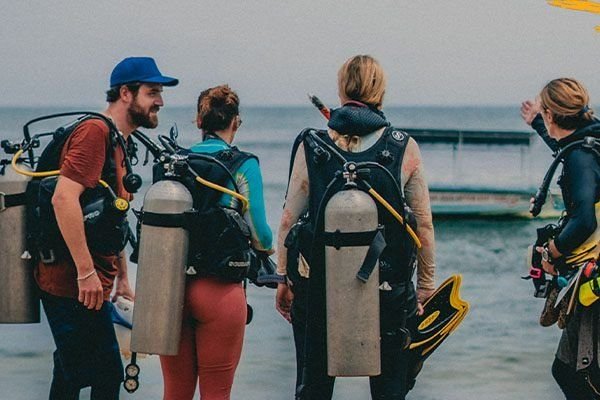
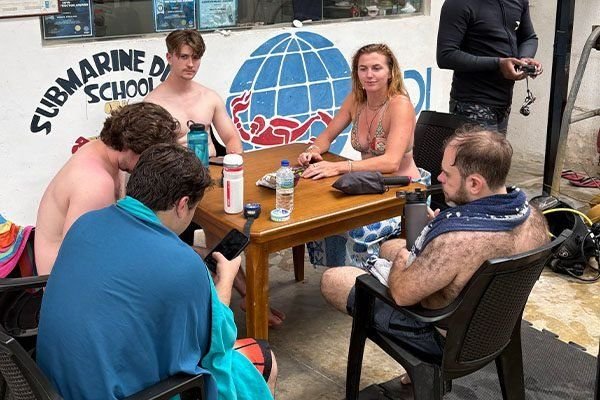
Most PADI Open Water Courses in Sri Lanka begin with a short introductory briefing covering:
- Basic scuba theory
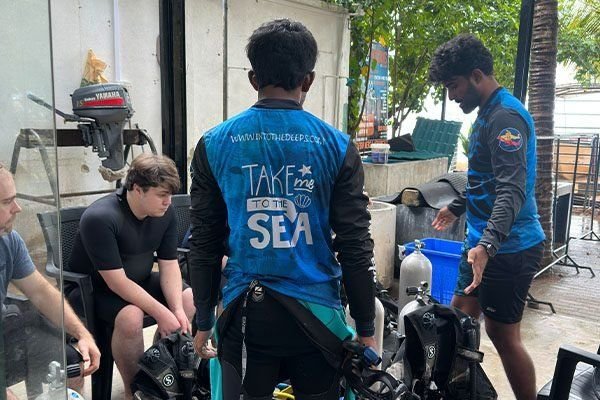
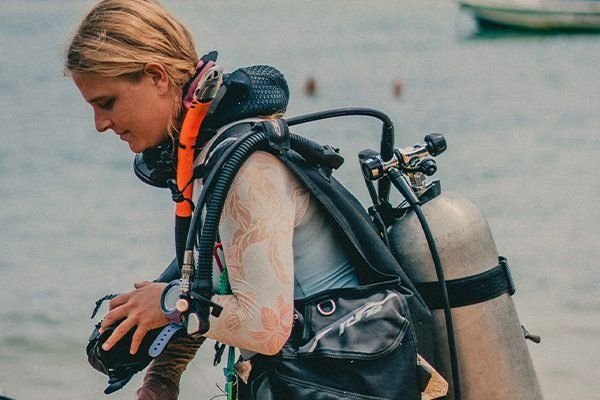
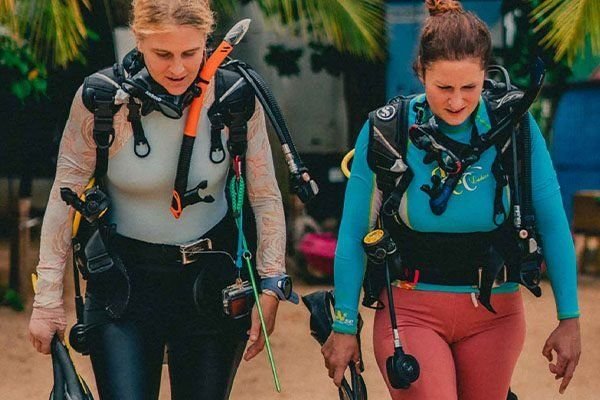
- Equipment overview
- Breathing techniques
- Equalization
- Underwater signs
- Essential safety rules
- Simple skills like regulator recovery & partial mask clearing
This usually lasts 20–30 minutes.
Next, you’ll head into shallow water (water where you can stand). Here we practice:
- Breathing underwater
- Equalizing
- Basic comfort skills
Once you’re comfortable, you’ll begin your first 12m open water dive at a real dive site.
2. Confined Water Sessions
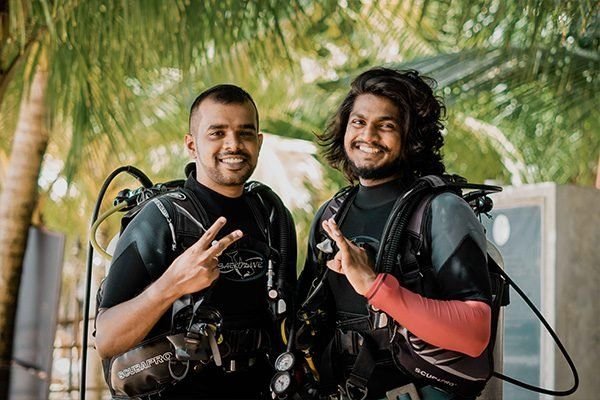
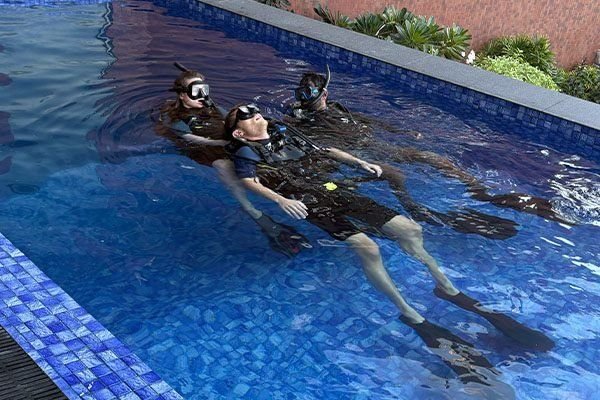
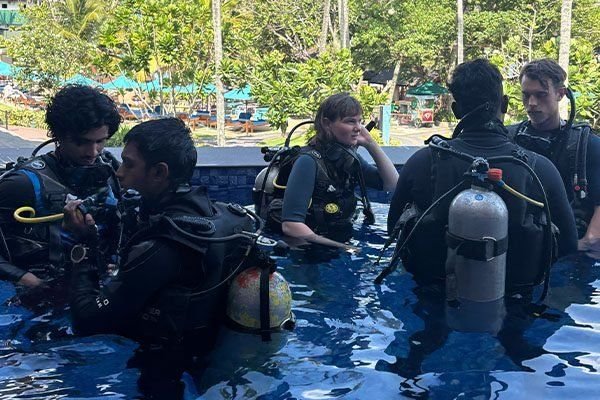
The confined water portion of the PADI Open Water Course includes 5 training sessions, each building on the last.
This takes place in a swimming pool or calm, pool-like environment.
You’ll learn essential problem-solving skills such as:
- Mask removal & replacement
- No-mask swimming
- Regulator recovery
- Alternate air source use + ascent
- Cramp release
- Tired diver tow
- Buoyancy practice
- Equipment removal & replacement (surface + underwater)
- Controlled Emergency Swimming Ascent (CESA)
- And much more
These sessions are designed to slowly build your comfort and confidence before entering deeper water.
3. Open Water Dives
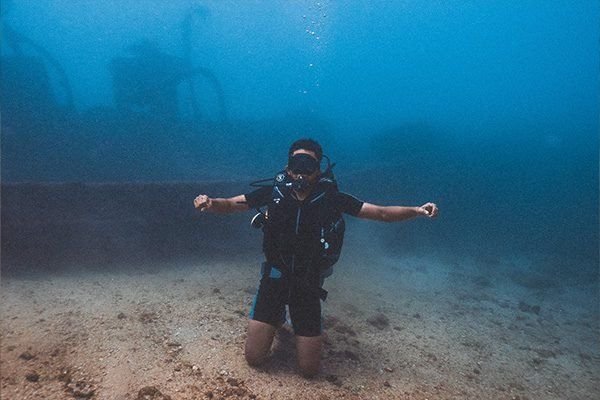
Your PADI course includes two open water training dives at increasing depths:
- Open Water Dive 2 : Max 12 meters
- Open Water Dive 3 & 4 : Max 18 meters
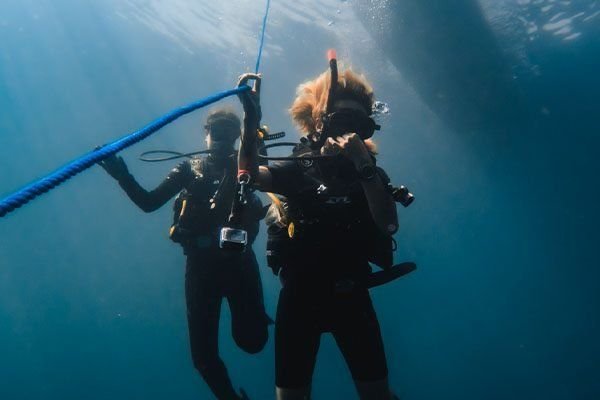
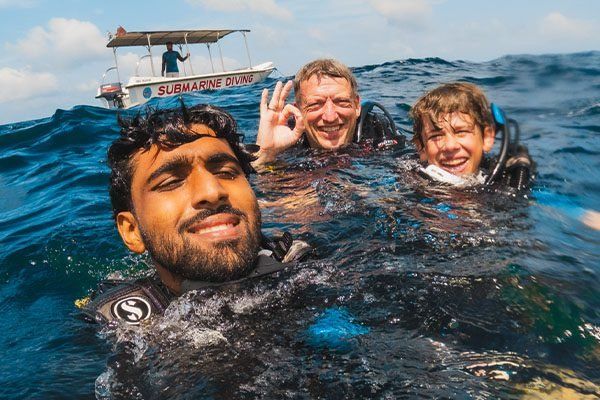
During these dives, you’ll repeat some skills from the pool and practice real diving techniques in the ocean.
To pass, you must perform all skills:
- Fluidly
- Confidently
- In a repeatable manner
- According to PADI standards
Even 10-year-old students complete these successfully – that’s the minimum age for the course.
4. Theory & Knowledge Development
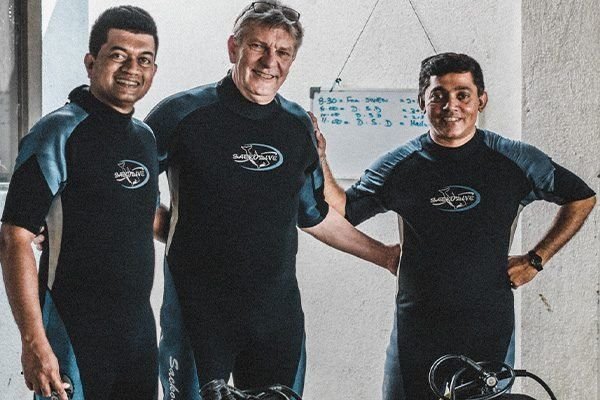
Throughout your training, you will also learn the essential academic side of scuba diving, including:
- How diving equipment works
- How to clean and maintain your gear
- Pressure & buoyancy theory
- Decompression theory
- Diving illnesses and how to prevent them
- Lost diver procedures
- NDL (No-Decompression Limits)
- How to use a dive computer
- Environmental awareness & ocean safety
You will also receive a PADI manual for independent study. If you need support, your instructor will guide you.
Final Exam
The exam consists of 50 easy multiple-choice questions.
Passing score: 75%
Most students score above 95%.
5. Certification
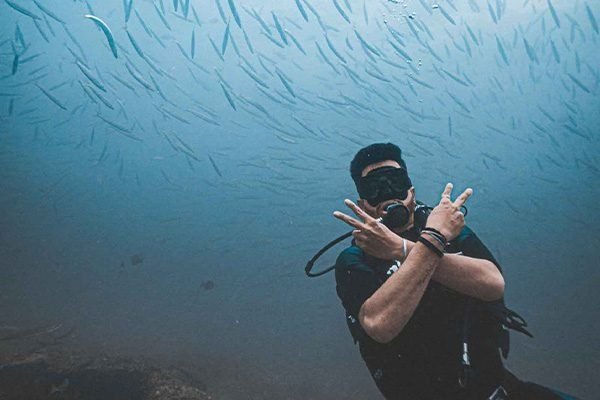
After completing all requirements, your instructor will:
- Approve your PADI certification
- Assist with logging your training dives
- Explain your next steps as a qualified Open Water Diver
You will officially join the global community of certified divers.
A note on different dive centers
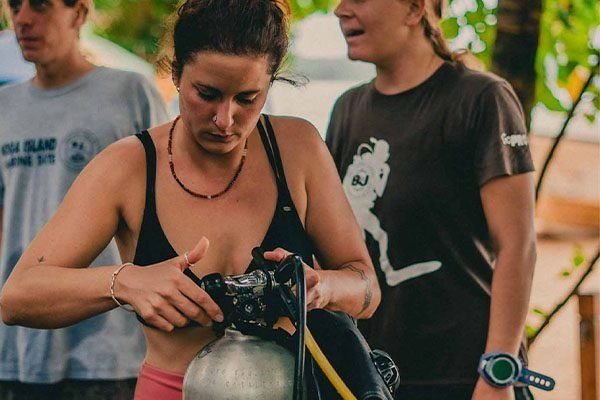
Different dive centers may follow different timetables or teaching styles.
The structure above is the method our dive center is most familiar with, proven over years of training divers safely and effectively in Sri Lanka.
The skills, sessions, and PADI standards remain the same – only the schedule may differ.